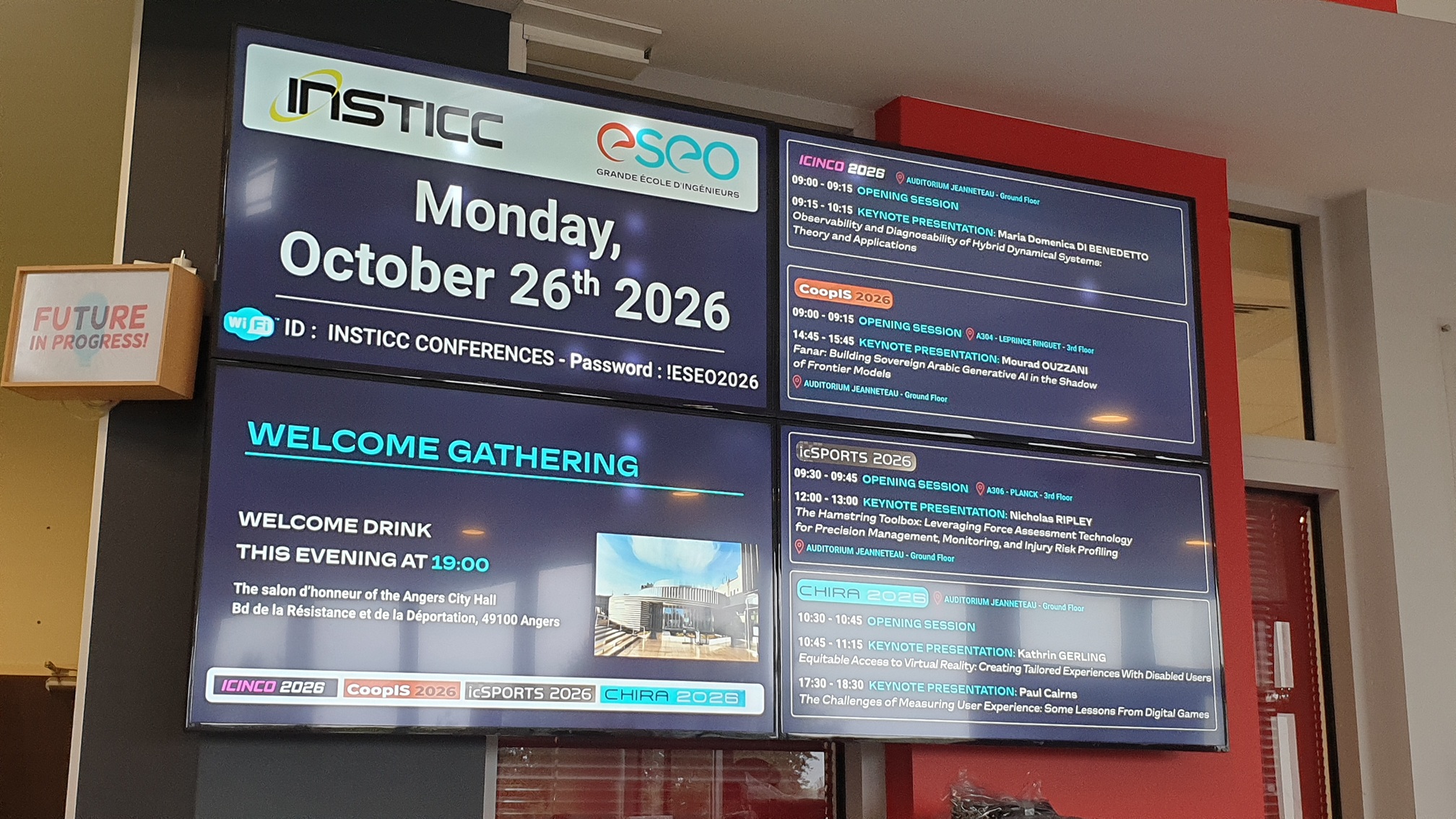
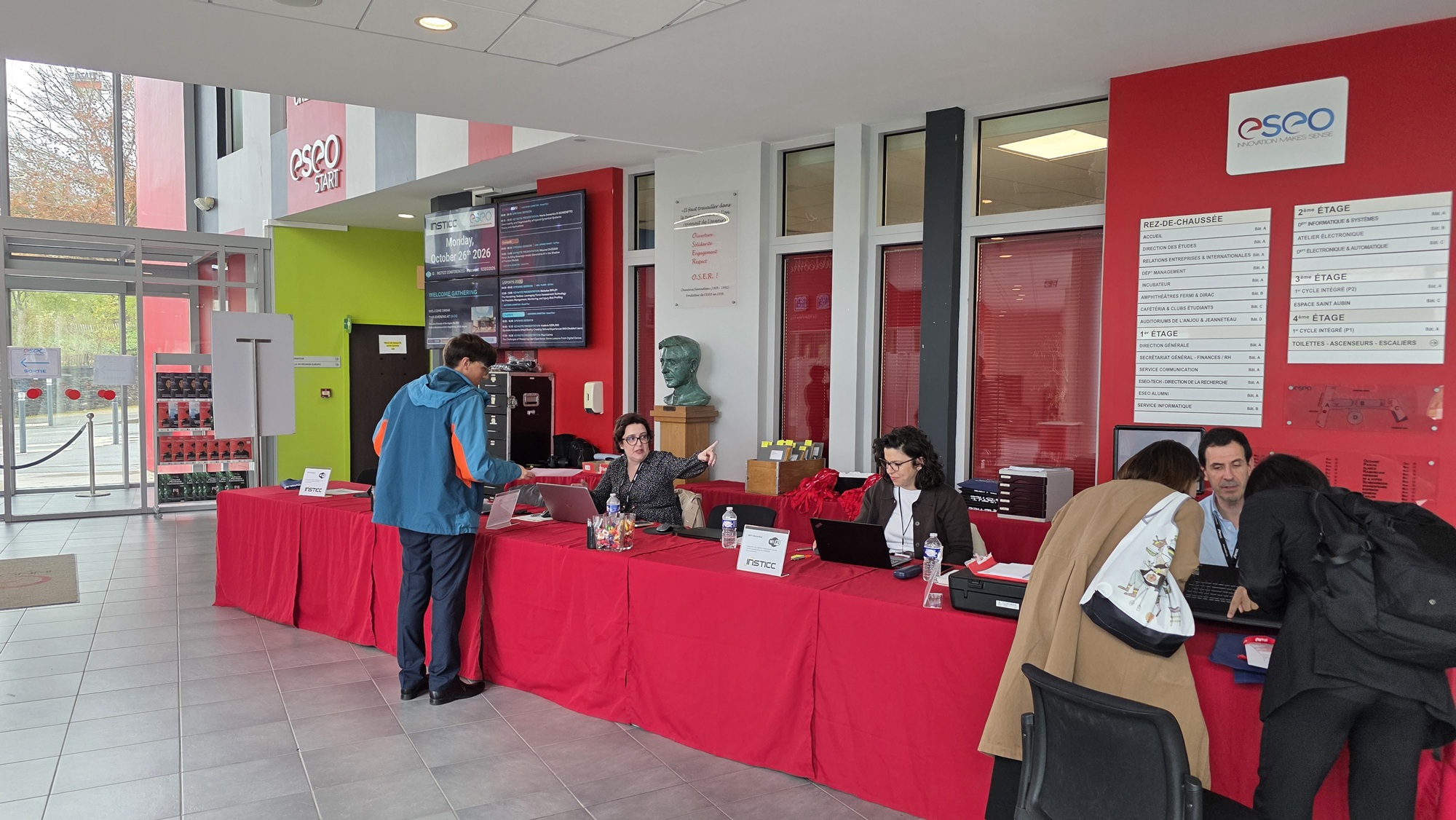
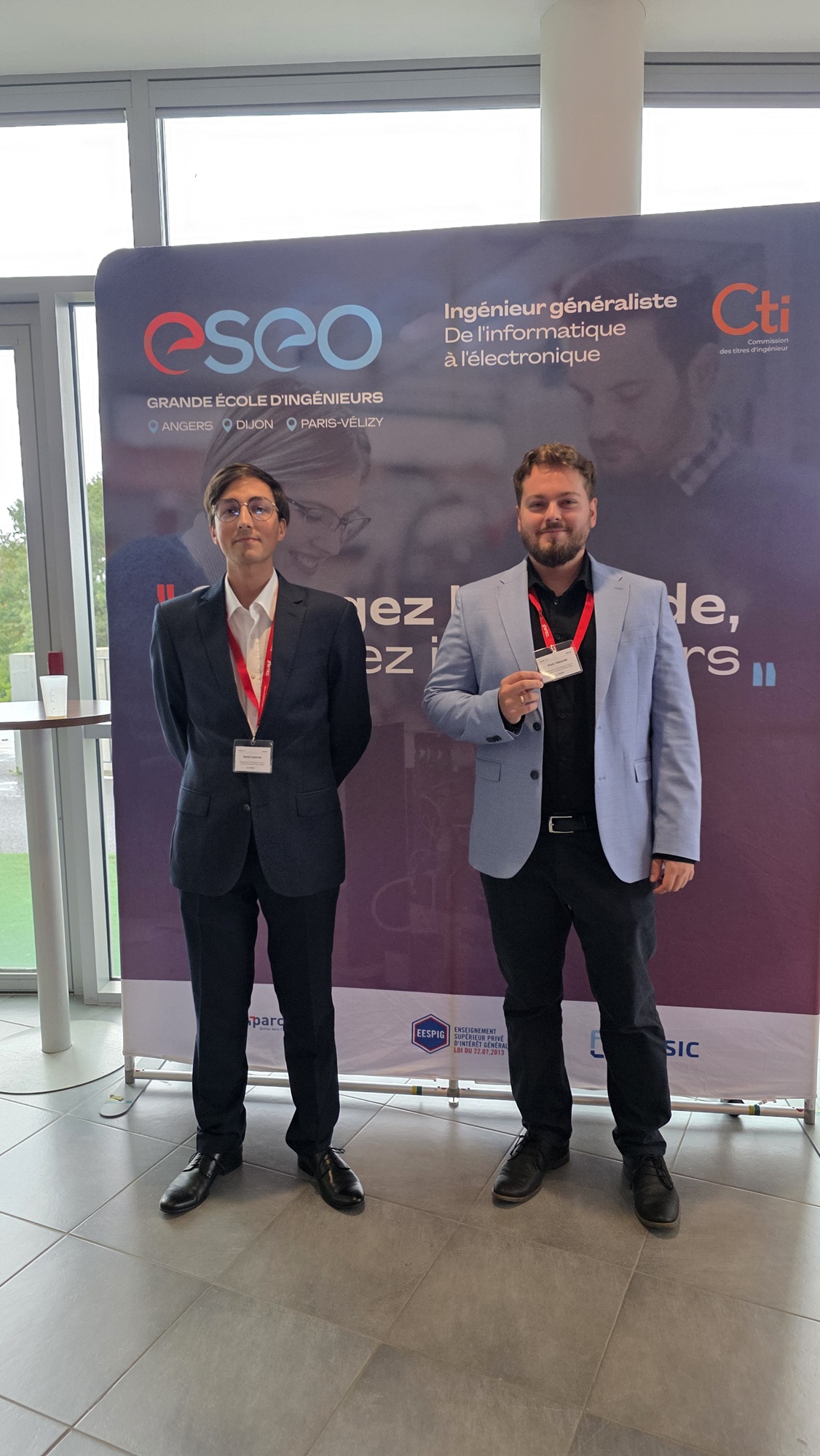
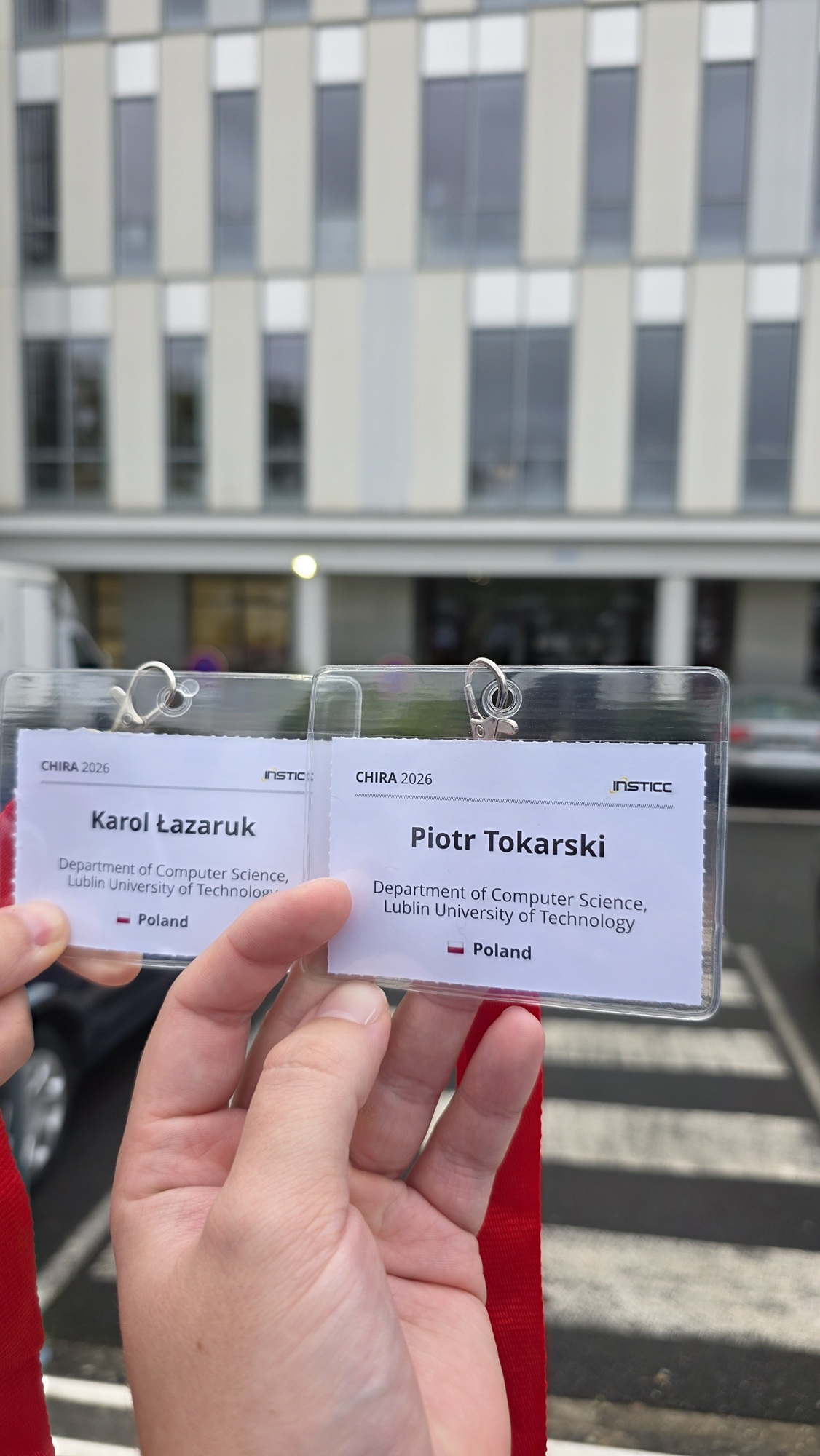
The 10th International Conference on Computer-Human Interaction Research and Applications (CHIRA 2026) was held on 26–27 October 2026 in Angers, France. The conference was attended by two members of the Computer Science Department: Karol Łazaruk, MSc Eng., and Piotr Tokarski, MSc Eng.
The conference focuses on research and practical applications in the field of Human-Computer Interaction (HCI). Its scope covered, among other topics, interface design and evaluation, digital accessibility and adaptive interaction, user experience (UX), multimodal interaction, virtual and augmented reality, as well as the application of artificial intelligence in interactive systems.
An important part of the Department’s participation in the conference was the presentation of two research papers.
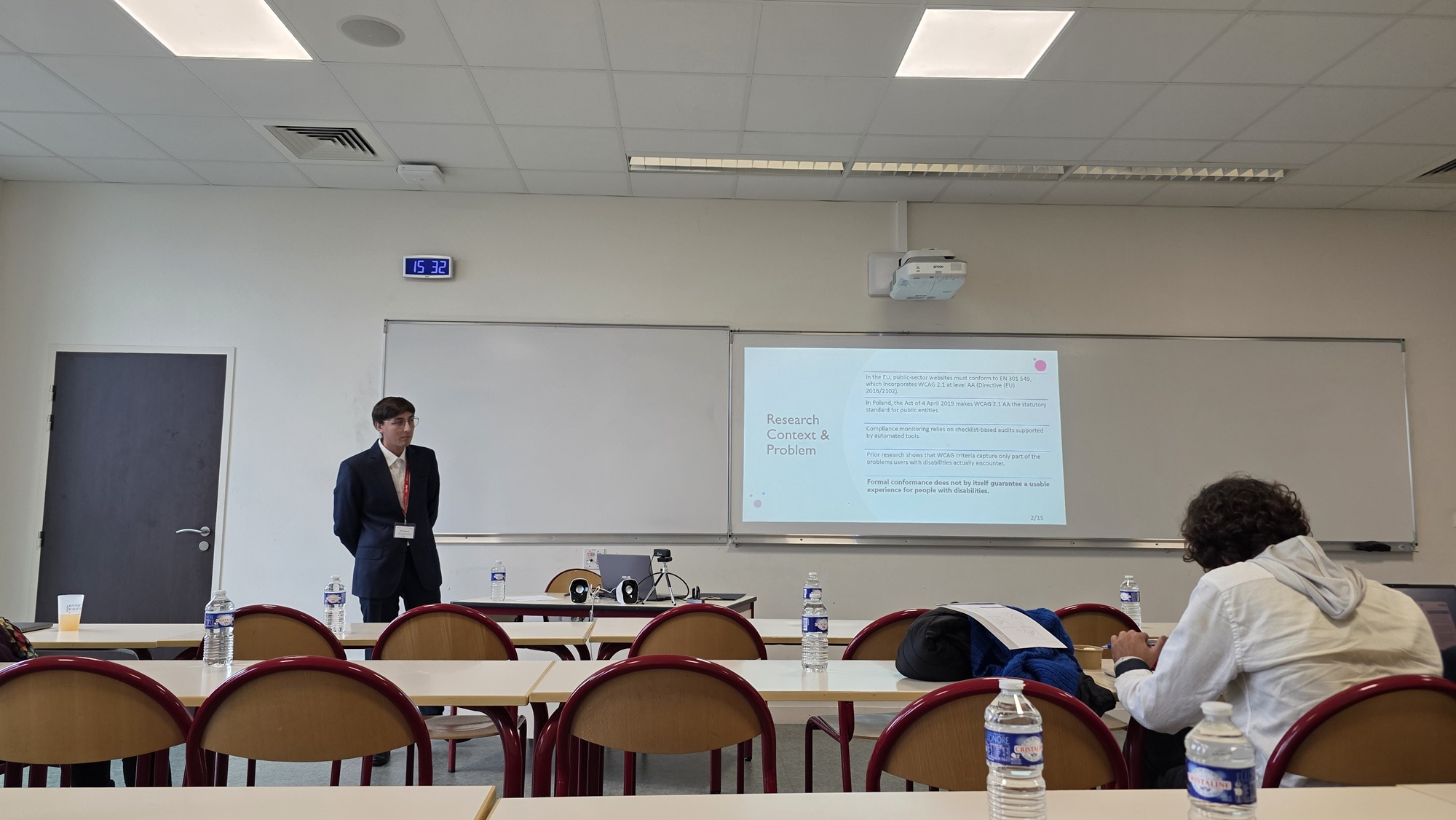
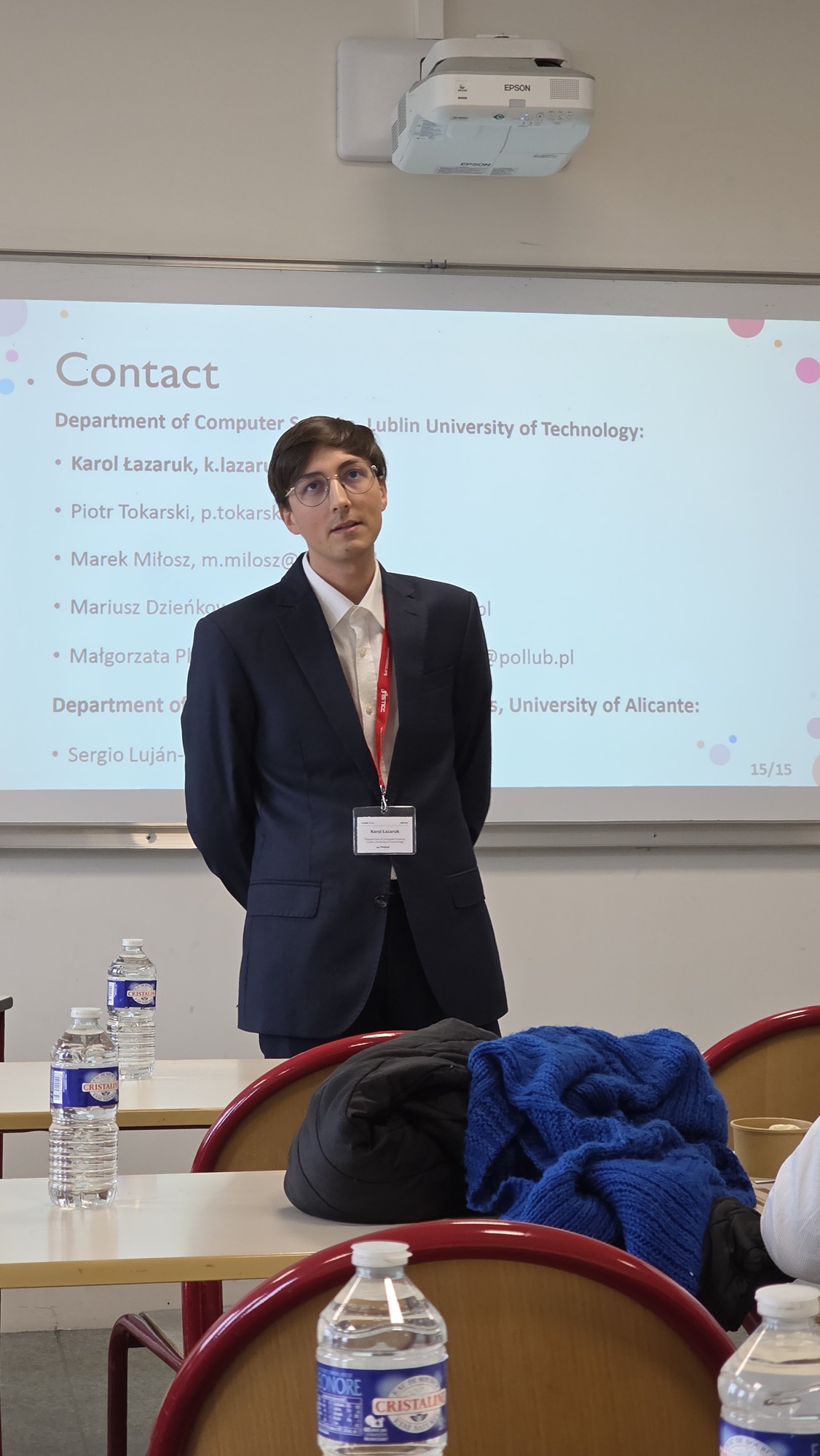
Karol Łazaruk, MSc Eng., presented a paper entitled “Beyond WCAG Compliance: Combining Accessibility Audits with Experiences of Users with Visual Impairment – A Case Study of a Municipal Website”. The paper presents an approach combining a formal accessibility audit of a municipal website, conducted against the WCAG 2.1 criteria, with a qualitative study involving users with low vision. The findings indicate that the two approaches complement each other: the audit helps identify technical issues, while user studies help determine which of these issues actually hinder access to and use of the website.
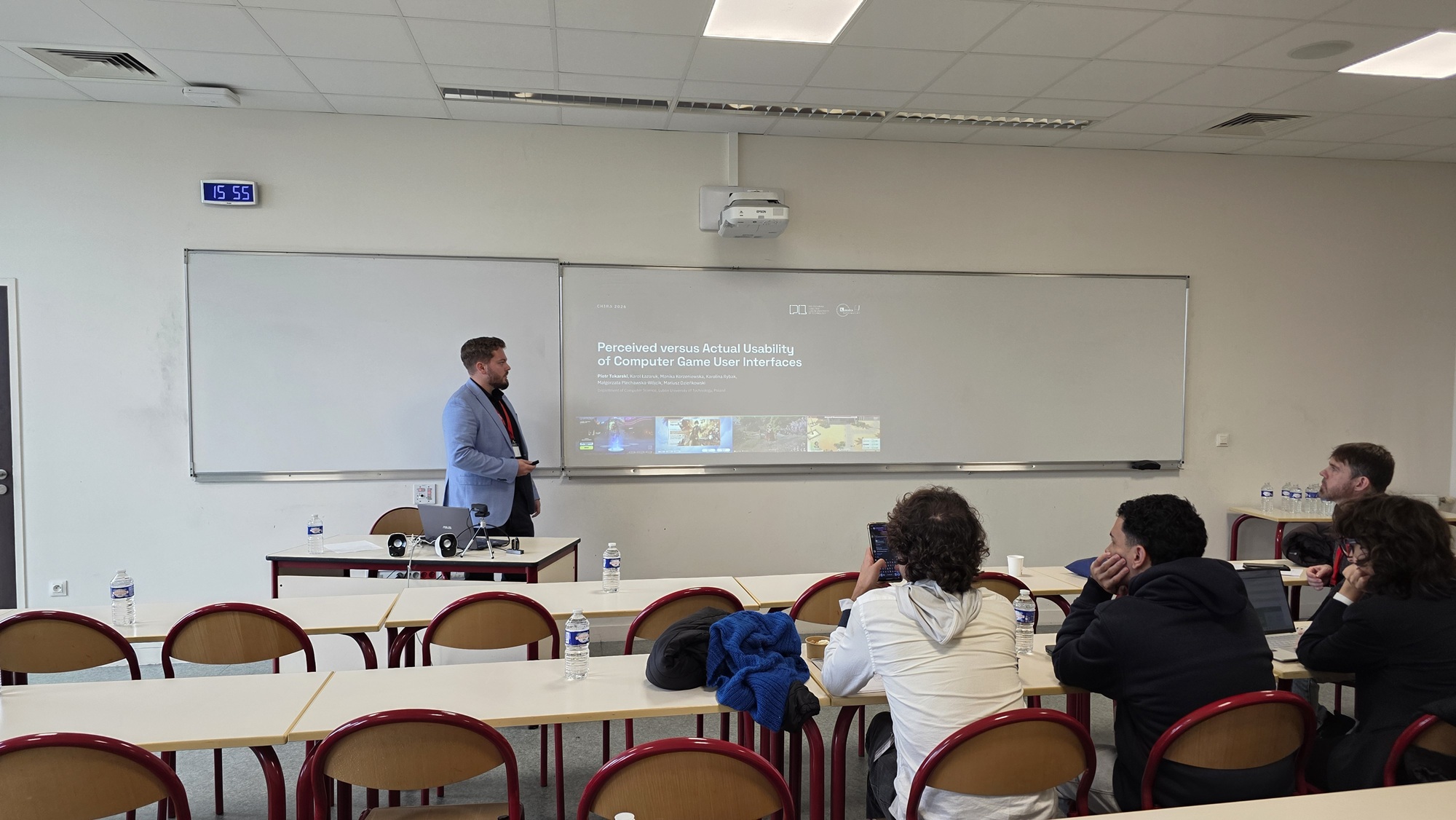
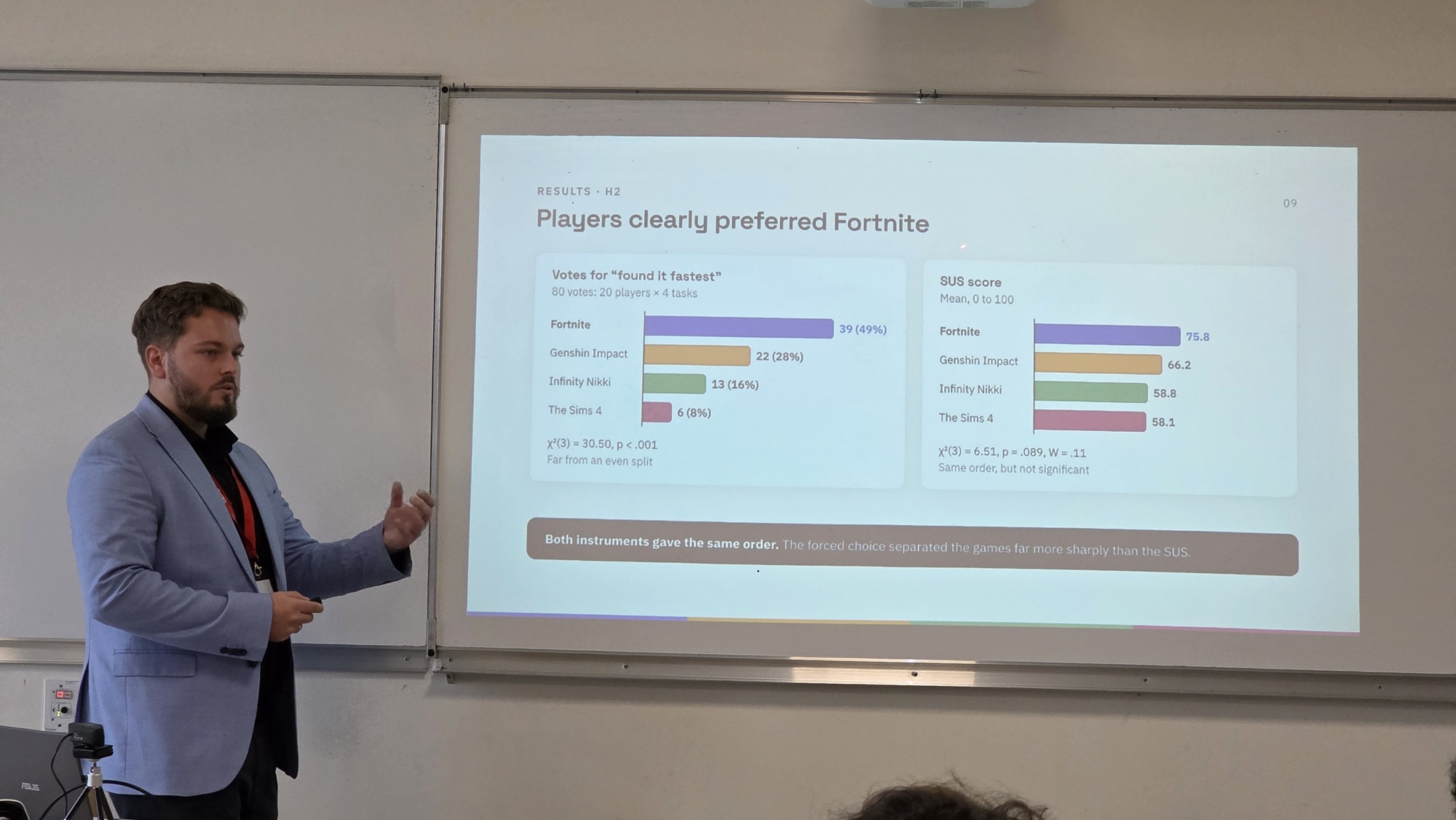
Piotr Tokarski, MSc Eng., presented the paper entitled “Perceived versus Actual Usability of Computer Game User Interfaces”. The study compared the perceived and actual usability of the user interfaces of four popular computer games, using eye-tracking techniques and the System Usability Scale (SUS) questionnaire. The analysis revealed clear discrepancies between players’ subjective assessments and the measured results of their performance when searching for interface elements.
Participation in the conference provided an opportunity to disseminate the Computer Science Department’s research findings to the international academic community, as well as to exchange knowledge and experience with researchers from around the world working in the field of Human-Computer Interaction.
The conference trip was funded through the “Ego faciam tibi scientiam doctores” competition, organised as part of the “Lublin University of Technology – Scientifically Excellent” Strategy (project numbers 27/EFD/2026/F and 29/EFD/2026/F).